- Follow Us


Dissolved Air Flotation (DAF) units are widely utilised in industrial wastewater treatment processes to remove suspended solids, oils, and other contaminants. This document provides a comprehensive technical specification for DAF units,outlining their operating principle and key industrial applications.
Operating Principle of DAF Unit
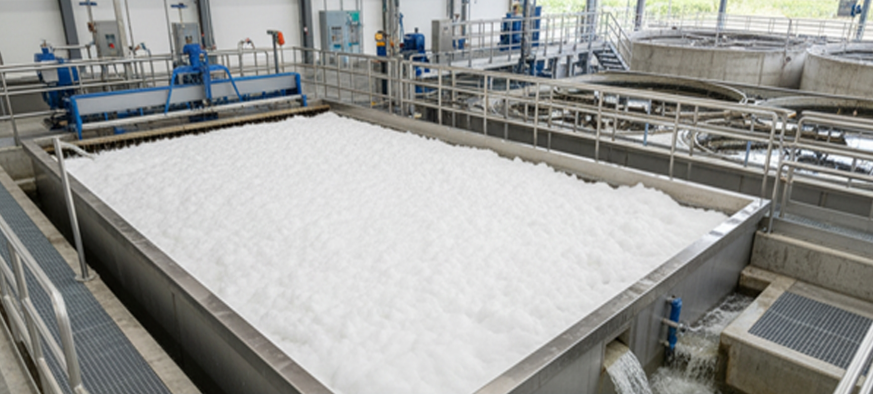
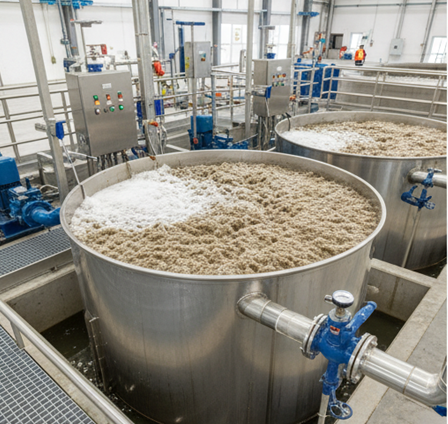
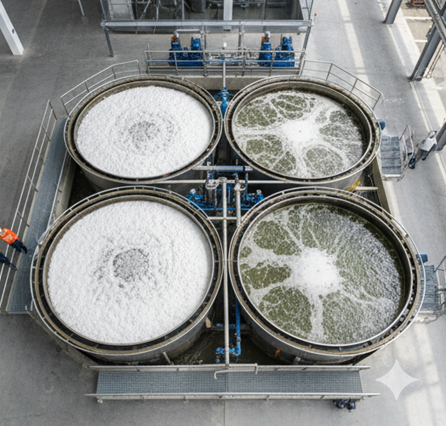
The core operating principle of a DAF unit is based on the separation of suspended particles from water using microbubbles of air. The process involves saturating water with air at high pressure and then releasing it at atmospheric pressure within the flotation tank. This sudden release of pressure causes the dissolved air to come out of solution as fine bubbles. These microbubbles attach to the suspended solids, fats, oils, and other contaminants, reducing their effective density and causing them to float to the surface of the water. The floated material forms a sludge layer, which is then mechanically skimmed off for further processing or disposal. The clarified water exits from the bottom of the tank for reuse or discharge.
Key Components
Process Steps
Technical Specification
| PARAMETER | SPECIFICATION |
| Flow Rate | 5 m³/hr to 500 m³/hr (customisable) |
| Operating Pressure | 4 to 6 bars (in air saturation system) |
| Bubble Size | 10 to 100 microns |
| Tank Material | Stainless Steel (SS304/SS316) or FRP |
| Retention Time | 5 to 30 minutes |
| Sludge Removal | Mechanical skimmer (rotating or chain type) |
| Effluent Quality | SS < 20 mg/L; Oil & Grease < 10 mg/L (depends on influent quality) |
Industrial Applications of DAF Units
DAF units are widely deployed across various industries for effective solid-liquid separation and removal of oils and greases. Some key applications include:
Conclusion
DAF units offer a reliable and efficient method for separating suspended solids, oils, and other contaminants from industrial wastewater. Their versatility and customisable design make them suitable for a wide range of industrial applications, contributing significantly to environmental compliance and resource recovery.