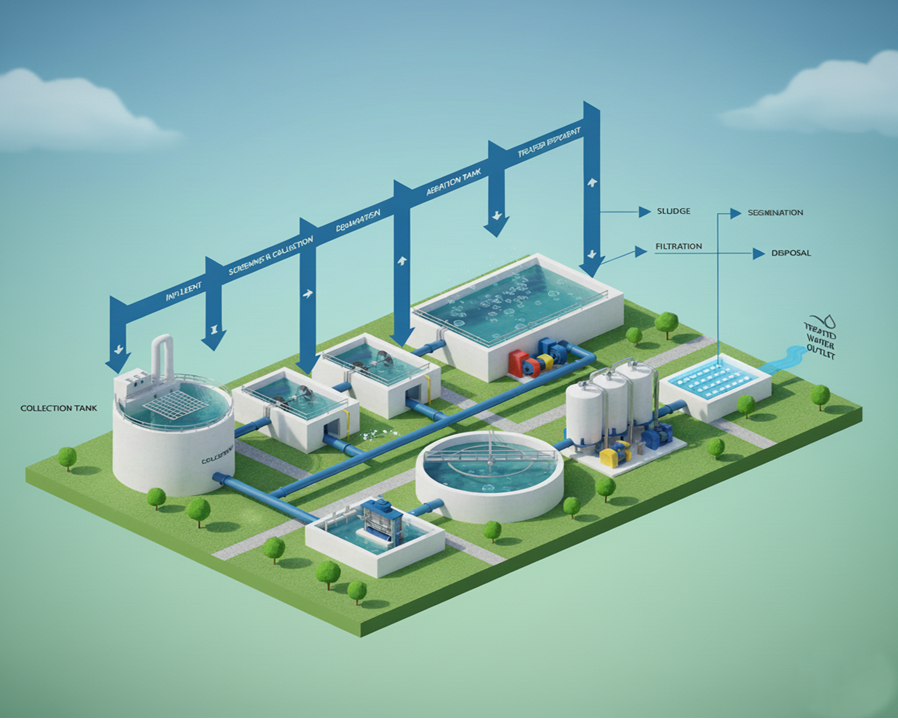
An Effluent Treatment Plant (ETP) is a critical facility in industrial and municipal sectors designed to treat wastewater (effluent) before its discharge into the environment or for reuse. ETPs ensure compliance with environmental regulations and contribute to sustainable water management.
Applications of ETP
• Textile and dyeing industries
• Pharmaceutical and chemical manufacturing
• Food and beverage processing
• Petrochemical and oil refineries
• Paper and pulp industries
• Municipal wastewater treatment
Plant Inlet and Outlet Parameters
| PARAMETER | INLET (UNTREATED EFFLUENT) | OUTLET (TREATED EFFLUENT) | UNITS |
| Chemical Oxygen Demand (COD) | 500–5,000 | <250 | mg/L |
| Biochemical Oxygen Demand (BOD) | 200–3,000 | <30 | mg/L |
| Total Suspended Solids (TSS) | 200–2,000 | <100 | mg/L |
| pH | 5.0–10.0 | 6.5–8.5 |
|
| Oil & Grease | 20–100 | <10 | mg/L |
Note: The actual
values may vary based on industry type and effluent characteristics. The outlet
values are typically as per Central Pollution Control Board (CPCB) norms in
India.
Range of Plant Capacity
ETP plants are
designed in a wide range of capacities to suit specific industry requirements.
Typical capacities include:
- Small-scale: 10 kilo litres per day (KLD) to 100 KLD
- Medium-scale: 100 KLD to 500 KLD
- Large-scale: 500 KLD to 10 million litres per day (MLD) or more