- Follow Us


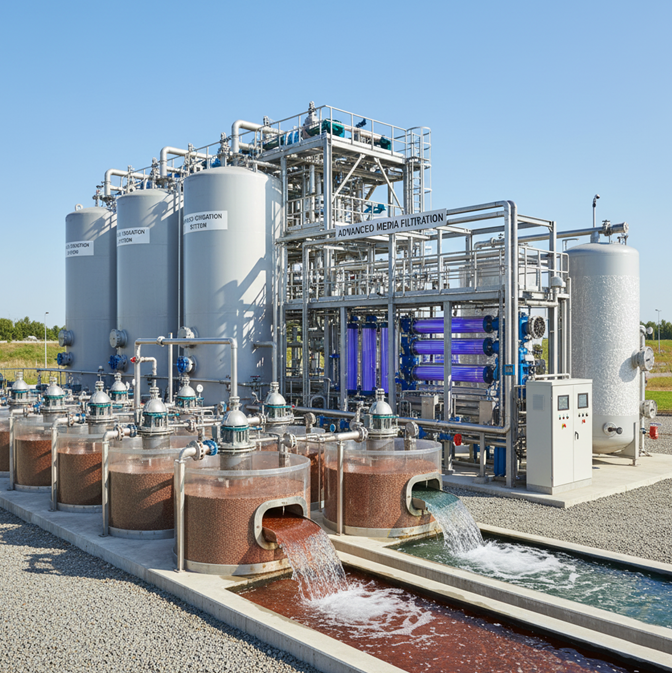
Iron removal plants are essential water treatment systems designed to eliminate excess iron from water sources. High concentrations of iron in water can cause staining, unpleasant taste, and operational issues in industrial processes. The following document provides a comprehensive overview of the technical aspects of iron removal plants, including their operating principle, common industrial applications, and key technical parameters.
Industrial Applications
Inlet and Outlet Water Parameters
| PARAMETER | INLET RANGE | OUTLET RANGE | UNIT |
| IRON (FE) | 2 – 10 | < 0.3 | mg/L |
| MANGANESE (MN) | 0.1 – 1.0 | < 0.1 | mg/L |
| PH | 6.0 – 8.5 | 6.5 – 8.5 | |
| TURBIDITY | Up to 10 | < 1 | NTU |
| PLANT MODEL | FLOW RATE | APPLICATION |
| SMALL | 1 – 10 m3/hr | Domestic / Small Industrial Units |
| MEDIUM | 10 – 100 m3/hr | Commercial / Medium Industries |
| LARGE | 100 – 1000 m/hr | Municipal / Large Industrial Plants |